Showing posts with label Reviews. Show all posts

Wednesday, July 20, 2011

The Harry Potter and the Deathly Hallows Part II post. (Come now. I write fantasy. You knew it was coming.)

This last Thursday night, like ever so many other human beings in the English speaking world, I saw the grand finale of the Harry Potter films. Watching movies at midnight has been a long time past time of mine. Often in costume. In fact, just last month, I saw a special showing of The Two Towers extended edition armed with home made lembas bread. But this wasn't just another pirate movie or something I could choose to watch at home on VHS (yes, another testament of my geek-dom. I still watch those). This was the last of a cultural phenomenon, a series that has taken over ten years to translate into film. So despite the fact that I had work at eight AM the next morning ,and despite the fact that it came after a long day at the DMV, I visited three theaters in person and then spent over an hour on line to get a hold of a ticket.

Eventually I ended up at Horton Plaza downtown San Diego. Needless to say it was crowded. The mall was swarming with young wizards and excited fans but there was something . . . different about these fans compared to those I've waited in line with for other movies.

First there was the costumes. Most of them were store manufactured. They were very accurate of course, but showcased none of the ridiculous dedication and knowledge it takes for a geek to piece one together on his own. There was one home made costume but after puzzling for some time over the inaccuracy I discovered (because the wearer of said costume was asked) that it was meant to be a Gandalf costume.

This was the first sign that something was wrong. As the night progressed many other strange things took place.

My brother and I sat in our seats, drawing each other Harry Potter themed word puzzles to pass the time

The ingenious and excruciatingly difficult Harry Potter word search my brother drew for me to do. You can tell how ingenious it was because he broke down and gave me hints (note the arrows) and I still didn't finish it before the movie started.


The slightly less ingenious crossword puzzle I drew for my brother. You can tell it is less ingenious because he finished it in a matter of minutes. Or maybe he's just a genius.


While we did this a light saber fight broke out somewhere in the theater, met with enthusiastic cheers from the crowd. A beach ball was released and thrown back into the air with shouted quotes from Spartacus. My little brothers' friend admitted to me that not only had he read none of the books but hadn't seen the last two movies.

I slowly began to realize that I was not surrounded by fellow die-hard fans of the boy who lived out to watch the final battle with he who must not be named and compare the adaptation to J.K. Rowling's original. I was in an excitable crowd of people harboring varying degrees of fondness for Harry Potter who were out to have a good time. If I was certain you had read Terry Pratchett's Going Postal I would tell you that they were not true pin-heads. They were merely *gasp* hobbyists.

When I first began to read the Harry Potter books I was reluctant because they were so popular (a bit of my inner emo manifesting itself there). But my sister insisted that however much the books were overestimated in the eyes of the public they were equally underestimated. They are praised and hyped at every corner of the universe because they've made so much money and, well everyone else is talking about them, but few people really take the time to recognize their true literary value. The believable aging of the characters, the progression of the themes as Harry gets older, the way Rowling sets up plot twists so far in advance and then hides them with school yard drama.

With that in mind I don't suppose it was much of a surprise to see that Harry's last moment was over shadowed by his own popularity. The world is full of people who want to be excited about something and one hit movie will do as well as another, but what really struck me, and made me feel just a teensy bit lonely, was that they were playing the game of the geeks. Except that it wasn't uncool anymore and it wasn't as meaningful. I can't help but wonder, does this always happen when something good is discovered by everyone else? Is it maybe better to let some things remain unknown?

Saturday, April 23, 2011

T: Tangled


Tangled. The word so acurately describes my feelings toward this movie.

On the one hand I really enjoyed it. It was cute and playful, full of swashbuckling, whimsey and charming characters. I supose that should be enough but . . .

I've loved the story of Repunzel for too long and I know that the Disney version will slowly milk the dark symbolism out of common tellings. No one tells the version of Cinderella where she speaks to her mother's ghost anymore or the version where her stepsisters cut of their heels and toes to fit into the slipper. No one remembers the other objects Snow White's stepmother tried to kill her with before the apple or that the prince, rather than kissing a dead girl, wanted to keep her on display in his castle. No one tells the part where the queen is forced to dance in hot iron shoes at Snow White's wedding.

Fairy Tales have been largely "Disneyified" in common thought. So much that a "Fairy Tale" often refers to a perfect world. Have you ever actually imagined being in a fairy tale? Sure they usually have a happy ending (If you are the hero or heroine. Otherwise you will be eaten or rolled down a hill in a barrel full of nails to pay for your sins) but first the poor princess or youngest son is beset upone by ogres, asked riddles they must answer on peril of their life, tormented by step relatives, nearly toasted by dragons, made to work in the scullery, lost for years at a time in the woods, turned into swans or pots of flowers, kidknapped by fairies, or tricked into making a bargain with the devil. I doubt any of the characters would describe their lives as perfect.

I don't for a moment beleive that adaptors of fairy tales must remain one hundred percent true to the original version. How would we ever know which one was first in a genre that originated in oral storytelling? Still, I do beleive that there is a reason why versions of the same stories appear almost everywhere cross culturally. It could, of course, be that there was an original version that was spread across the world and changed by each culture. Or it could be that rooting for the third and youngest son, discovering that the myserious stranger in the woods is really royalty, and being banished from home by relatives who aren't true relatives, are all part of our collective consciousness, integral to our experience as human beings. These motifs symbolize our love for the underdog, our ability to find beauty in the strange, and the feelings of alienation we sometimes experience at home. These ideas can be shifted and morfed to match the idealogy of the story teller but not ignored. Not if the power of a story that has been told over and over for hundreds of years is going to remain intact.

So what were the changes in the Repunzel story that I fear will be lost?

First, the character of the witch. I have always been facinated with the idea of an old woman, shunned and feared by society, wanting to raise and love a child but not knowing how. She gets the child by blackmail (because repunzel's parents tried to steal from her)and then locks her in a tower to keep her safe. The protection soon becomes a curse and doesn't even keep out the danger. In Tangled, however the witch is purely selfish, wanting to use Repunzel's magic hair to stay young forever. Becuase if we are to keep our own children in their ivory towers we can not allow them to entertain the idea that a single person could contain both admirable and despicable qualities.

Second, the whole metaphor or the girl in the ivory tower. I understand that this is a difficult issue because so many people --with good reason --are trying to change the ideaology of women being "won" or "obtained". I have no objection whatsoever of a more modern, gender equal twist being added to the prince's treacherous trek through the woods, poetical acrobatics to get the girl's attention, and scaling of a tower with no doors to reach her, but the element is so obviously there that it should at least be addressed. There is certainly potential for a strong love story there as well. Repunzel does help him by letting her hair down (figuratively as well as literally?) and he is blinded by trying to reach her (love is blind or so they say)and then healed by her tears after she is exiled by her family. Tangled encorperates a love story of course, but it doesn't use any of the symbolism.

Disney fairy tales remind me of the "Fair Re-Tells" my sister wrote when she was twelve. All the characters did the nicest and most logical thing from the very beginning, resluting in paragraph long stories that read something along the lines of "Once upon a time there were some people" without all the stunning conflict and tangle of magic and ideas that a story should be. They told us the right thing to do but didn't teach us anything about life.

So, do I recomend that you see this movie? Yes. It is charmingly entertaining and makes me feel warm and fuzzy inside. Still, I regret the loss of the deeper, darker parts of the Repunzel story.

Saturday, April 16, 2011

M: McKillip


Of all the authors I could read over and over and never be tired of, Patricia McKillip is on the top of the list. Her newest book, The Bards of Bone Plain, did not in any way disapoint me. Her prose is so rich, abuntant with feeling and imagery. She creates music with her words that you can feel in your bones.

The story of The Bards of Bone Plain centers, of all things, around the research of a term paper of young scholar, Phelan Cle. This is a McKillip world however, so even though the time era (if there is such a thing as time in her books) is something similar to Edwardian, bards still play at court and even something as mundane as chronologuing the life of a dead poet is clouded in magic and mystery. In fact, on closer imspection it is the simplest things that contain the most magic. The past quickly merges with the present as Phelen begins to unravel them both.

Even more than her astonishing style, what makes McKillip's books seem so much like poetry is that they exist in a place that follows no rules. Musicians compete for the position of royal bard with songs drawn from their bones while the queen throws garden parties and the princess drives her automobile to an archeological site to dig up ancient tombs. Anything can exist and yet the world winds around itself, so inctricately connected, so vivid and tantilizing that the reader never for a moment questions.

Other favorites by Patricia McKillip:

Alphabet of Thorn


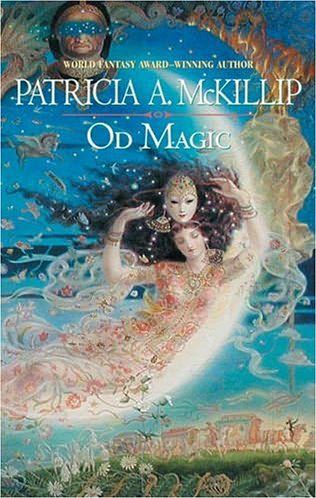
Od Magic


Song For the Basilisk


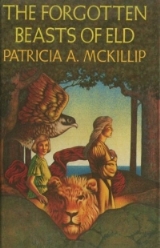
The Forgoten Beasts of Eld


In the Forests of Serre


Note also the beautiful book covers by Kinuko Kraft. No one else could fully capture the mood of these books.

Monday, February 21, 2011

In Which I Rant About the 2010 Robin Hood Film


Reasons for seeing this film:

1. It has a beautiful soundtrack.

2. I like that it ends with Robin going into the woods instead of coming out of them. The traditional outlaw becoming an Earl is supposed to be a 'Happy ever after' ending but it is much more satisfying to see the legend begin than to see it end.

Reasons for not seeing the film:

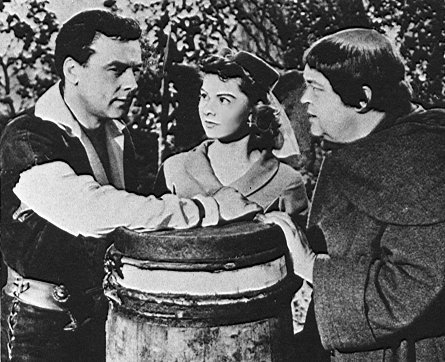
1. Robin is too serious. And too old. In all the ballads Robin Hood is young and spritely. An impudent youth who gets the better of “the man”. A poor man's incantation of the Trickster God. Of all the films I've seen this is the one in which his character stays most true to the spirit of the legend:


2.Maid Marian is married. Before she was attached to the Robin Hood legends Maid Marian was the Queen of the May Games. It is odd, I suppose, that fertility was celebrated with the glorification of virginity. That would be an interesting theme to explore in a retelling of Robin Hood but she is meant to be Robin's “virgin bride”, waiting until he is no longer outlawed to be with him. Can that be changed? Of course. Unaddressed? No.

3. King Richard is dead. I understand that this is the “historical version”. I have my theories on that since history can become as much a collaboration of various traditions as legends. Nonetheless it has come to the recent attention of history books that king Richard I wasn't quite so heroic as Sir Walter Scott made him out to be. I'll grant that this is true. I'll also grant that if the film makers were to place the story during the Coer de Lion's absence to the “Holy Wars”, as is tradition, Robin would only have reign of the woods for three or four years, his 'happy ever after' with Richard actually ruling England would last less than one year, and before Robin had a chance to die John would be legally on the thrown where nothing could be done about it. My question then is if the film makers wished to go through so much trouble to break away from tradition and keep things “historical” why set the story in the 1200s at all? Documentation of the Robin Hood legends didn't turn up until the mid 1300s. That was also when the English Long Bow was invented, the term –and really class of –yoeman took form, and the poaching of deer and danger of outlaws became a major issue in Sherwood and Barnesdale. The only mention of a king's name in any of the ballads was a King Edward and Edward IV made a trip to Sherwood and Barnesdale during that time.

4. The plot itself. Awkward is the word I will use here. Or maybe undirected. I never got the sense of a real climax or even much of a journey. Robin begins fighting in France for King Richard in which there is a long battle scene with no particular character development and ends with a long battle against French soldiers in England with no particular character development. The difference, I think, is supposed to be that he believes in this fight because he is protecting his home instead of invading someone else's. I just don't feel like the events in between adequately lead up to that idea. There are a couple scenes involving him realizing that he was born in Barnesdale and remembering some things his father told him about not giving up but its not enough. He hasn't changed enough to have grown into the legend he is about to become.

One day someone will make a really good Robin Hood movie. Until then I will watch DVDs of this entirely unhistorical fiftiesified Richard Greene show


and whistle this tune